Mostrar mensagens com a etiqueta culture wars. Mostrar todas as mensagens

quinta-feira, 25 de setembro de 2025

The US Culture War against Europe

c6df2d68-080a-4543-9d72-a4bdfcb6f039.png.webp

“I hate to say that I told you so, but I told you so.” It may seem self-serving to appeal to one’s own foresight, but in the face of facts, it becomes inevitable.

Since 2018, I have been focusing on the so-called “culture wars”, a phenomenon rooted in the clash between so-called “conservatives” and “progressives” around moral issues such as abortion, the role of religion in society, same-sex marriage and other LGBT rights, gender identity, immigration, or national identity. These differences generate extreme polarization, amplified by social media, and translate into a genuine struggle for cultural hegemony at the heart of our societies.

In the face of the rise of a cultural left, which abandoned workers’ struggles to concentrate on identity-based causes and whose values gradually became dominant within social institutions, there emerged an inevitable reaction in the opposite direction—the so-called “cultural backlash”, a political response promoting ethnonationalist values.

This brings us to the recent report by the European Council on Foreign Relations (ECFR), in partnership with the European Cultural Foundation, which states that Donald Trump is waging a “culture war” against liberal democracy in Europe, fostering an ideological shift toward nationalist and illiberal values.

A report that is not only unsurprising but also belated. For quite some time, Europe has been the privileged stage for illiberal experiments, reopening old wounds on a continent scarred by the traumas of nationalism and authoritarianism. The political transformations that unfolded in Europe after the 2008 financial crisis and the 2015 refugee crisis are paradigmatic of the electoral drift toward what political scientist Cas Mudde has called the “far right.”

The instrumentalization of economic resentment in favor of an ethnic and religious nationalism—directed against immigrants, the left, and multiculturalism—resonates deeply with the emergence of nationalisms in the 1930s, the results of which are all too well known.

Yet Le Pen, Orbán, Fico, Farage, Meloni, or Wilders are not merely the result of MAGA-style ideological channelling of resentment, as the report suggests. In fact, the “culture war” Trump is now waging against European institutions, the multilateral order, the values of fundamental rights grounded in the principle of human dignity, and the foundations of the liberal rule of law, began with Putin. And here the report falls short.

It is precisely with Vladimir Putin that the seeding of racial and religious nationalism in Europe begins—a process that culminates in the war in Ukraine. Let me explain: Putin viewed NATO’s eastward expansion not only as a geopolitical issue, but as a civilizational one. Conceiving Russia as its own civilization, based on a distinct cultural and religious identity, Byzantine in orientation and czarist in spirit, Putin regarded NATO’s presence on his border as a civilizational threat—representing the advance of liberal democracy and its inclusive values, which undermine Russia’s spiritual order with sexual freedom, women’s emancipation, and LGBT rights.

It was precisely to confront liberal democratic values that Putin financed the European radical right, promoting an illiberal order whose Western epicenter became Orbán’s Hungary.

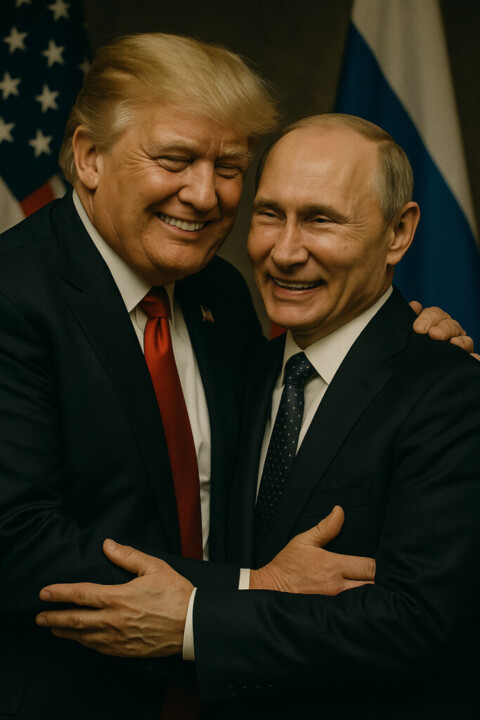
Trump’s “culture war” against Europe is therefore part of a broader cultural war that unites a nationalist international of authoritarian inspiration, neofascist in kind. The exaltation of a nationalist ideal of economic, industrial, cultural, and geopolitical closure is a project that binds Trump and Putin with the same objective: to dismantle Europe’s human rights order and its liberal democracy from within.

Europeans would do well to remember the old maxim: those who fall asleep in democracy, wake up in dictatorship.

segunda-feira, 7 de julho de 2025

Cultural Appropriation: Who Uses, Owns? Controversial Ideas on Cultural Ownership

create-a-highly-detailed-and-sharp-focused-image-t

Cultural appropriation is one of the central post-material battlegrounds of the contemporary world. It mobilizes questions of identity and culture, while often overlooking a foundational principle of culture itself: hybridity.

At its core, the concept of cultural appropriation refers to the use of cultural elements—symbols, clothing, hairstyles, cuisine, religion—originating from a minority group by members of a dominant culture. This usage is commonly seen as a form of disrespect and, implicitly, as a claim of ownership over those elements. In a time when culture is highly politicized, the subject demands careful and nuanced analysis.

The very notion of appropriation entails two problematic assumptions:
(i) that there exist authentic, untouched cultures;
(ii) that any use of minority cultural elements by dominant groups is inherently a violation and a sign of oppression.
Let us take each in turn.

Cultural hybridity can be systematically understood as a continuous and dynamic process of mutual fertilization and re-symbolization. It generates new cultural objects, often at the cost of tradition, while preserving the memory of the original ones. But the encounter of cultures—seldom peaceful—is part of the human story. Catholic imagery of saints, ex-votos, and pilgrimages, for example, owes much to Roman civic religion and Celtic spiritual practices. In this light, “authentic” or “pure” cultures—an idea explored early on by Afro-Brazilian scholar Roger Bastide—are a myth. Inauthenticity is, in fact, the hallmark of all cultures. Claims of purity are political acts, rooted in collective memory and identity, and “authenticity” is a social construct.

The second problem—the assumption that dominant groups using minority cultural elements is necessarily an act of oppression—stems from the rise of Critical Theory, particularly its Gramscian threads, which frame all relations in terms of systemic domination and emancipation. Taken to extremes, this perspective fosters a doctrine of absolute and eternal Western guilt. This is particularly evident in the asymmetry of the discourse: the term “cultural appropriation” is rarely invoked when a minority group adopts or reinterprets elements from the dominant culture.

In Woke Racism, John McWhorter notes the contradiction: white people are expected to respect, praise, and elevate minority cultures—but not touch them. This resembles a form of secular religiosity: cultural objects are placed on sacred altars, to be venerated but never used. Yet a white person can (legally and morally) incorporate cultural elements into artistic reinterpretations, culinary fusion, or aesthetic appreciation without necessarily committing a cultural offense. The only justification offered for the claim that a Black person may wear an Italian suit or a Scottish kilt, but a white person must not wear dreadlocks (a hairstyle that has existed in various forms across many non-African cultures throughout history), is that of historical oppression—an idea then crystallized in the notion of cultural appropriation as inherently disrespectful.

That said, the issue is not black and white. Cultural appropriation can indeed constitute symbolic violence. It becomes problematic, for example, when white supremacist movements adopt minority cultural symbols (such as dreadlocks) as emblems; or when dominant groups temporarily borrow minority elements purely for commercial gain; or when Western New Age movements adopt non-Christian religious symbols and strip them of their original meanings. Even pop culture is not immune—consider Marvel’s use of Thor as a superhero, which many argue trivializes a religious deity.

In conclusion, we must draw a necessary distinction between:
(a) a puritanical and politicized idea of cultural ownership, which holds that cultures and their elements belong exclusively to certain groups, and that usage requires permission—thus denying the inherently hybrid nature of culture; and
(b) genuine cultural appropriation, in which the use of cultural elements is so detached or commodified that it distorts or desecrates the dignity and meaning of the original culture.

terça-feira, 1 de julho de 2025

Are There Lessons for Democracy in Budapest’s Pride March?

The path Viktor Orbán took from liberal democracy to democratic illiberalism was neither abrupt nor improvised. It was a cold and calculated march—along the ground cleared by the political merits of populism and the rising tide of illiberal values that Orbán anticipated and, by embracing, helped consolidate.

Broadly and clearly, democratic illiberalism rests on a reversal of the principles of political liberalism that once defined the rule of law, democratic pluralism, and constitutionalism. These principles include respect for institutional checks and balances, the safeguarding of political pluralism as a mechanism of representation, and the protection of fundamental rights as the constitutional bedrock of modern democracies.

Illiberal democracy, by contrast, elevates what might be called hyperdemos—a symbolic and operational hypertrophy of “the people” (demos) as the sole and ultimate source of political legitimacy. In this model, constitutional, institutional, and liberal frameworks that normally balance popular sovereignty are hollowed out. The people are invoked as a homogeneous and infallible entity, whose direct will justifies the dismantling of counterpowers, the marginalization of minorities, and the erosion of the deliberative public sphere.

Orbán—and other populist politicians, whether from the radical right or left—claim to be the “voice of the people,” but their definition of the people is narrow. It is the “pure people,” or “righteous citizens,” whose values align with their own narratives. Everyone else is suspect.

In the case of right-wing illiberal democracy, the people are equated with the national body—majoritarian by nature and intolerant of dissent. This includes structural machismo, radical moral conservatism, and significant doses of xenophobia and racism. Sexual, ethnic, racial, and national minorities are cast as the other—the threat to the sacred values of the nation.

And yet, on Saturday, June 28, something remarkable happened. In Budapest, approximately 200,000 people took to the streets to mark the 30th anniversary of the city's Pride March—defying police restrictions and Orbán’s illiberal agenda. Whether one personally supports Pride or not is beside the point. What mattered was the symbolic weight of the event: it was a mass act of resistance against moral uniformity and the assault on pluralism that the Hungarian government so clearly embodies.

There are lessons to be learned here. Western societies may be increasingly polarized, fed by populist narratives and social media-driven echo chambers, where outrage and alienation thrive. But the defeat of liberal democratic values is far from inevitable.

Resisting illiberal regimes—whether Orbán’s or Trump’s—is not about denying majoritarian will. It is about opposing those who, under the guise of representing the “authentic people,” unravel societies and corrode institutions in pursuit of autocracy.

The people of Budapest understood that the Pride March was not just about LGBTQ+ rights. It was about democratic diversity, political pluralism, and the foundational pillars of constitutional democracy.

domingo, 29 de junho de 2025

It's time for Burka: radical right is creating a 'political fact' in Portugal

create-a-featured-image-that-captures-the-contenti

Law often lags behind reality. This is a well-known maxim in legal theory: laws emerge, for better or worse, as responses to new and evolving social challenges. Politics, too, is meant to offer such responses—through negotiation among competing forces in search of what has been called “common ground.”

However, the rise of populist and demagogic movements has disrupted this process. In such contexts, “political facts” are no longer the product of pressing, undeniable realities, but often fabricated events—crafted to stir division and signal ideological belonging.

That is precisely where we find ourselves with a recent bill proposed by the far-right Chega party in Portugal. It aims to ban face coverings in public spaces—even when worn for religious reasons.

Though the bill is framed around public safety concerns—arguing that face coverings may hinder criminal investigations—it can be more accurately understood as an attempt to manufacture a political issue where none exists. On social media, party members have made it clear: this isn’t about all forms of face coverings; it’s specifically about banning the burka.

So, how is this a fabricated issue? Simply put: the burka is not a common sight in Portugal. One might argue that Chega is attempting to anticipate future problems. But in light of the party’s track record, it’s more plausible that this is part of a broader strategy to sustain a constant sense of cultural alarm. After the governing coalition (AD) took on the politically charged topics of immigration and citizenship law—triggering constitutional concerns and accusations of yielding to nativist pressure—Chega had to raise the stakes. What better way than to import a moral panic from other European contexts?

What’s telling is how the party justifies this measure: by positioning it as a feminist act, a defense of women’s rights against religious oppression. The bill states that anyone who forces another person to cover their face through threats, coercion, or abuse—specifically based on sex—should be punished under the criminal code for aggravated assault.

At the same time, the bill frames secularism as a justification for banning religious symbols in public institutions—schools, hospitals, public transport, and other state-run facilities. Here, Chega merges two traditionally contradictory lines of the radical right: an aggressive secularism aimed at Islam, and a nostalgic Christian nationalism seen in leaders like Viktor Orbán.

This rhetorical juggling act is part of a broader far-right strategy observed across Europe: embracing temporary “homonationalist” and “femonationalist” narratives—terms analyzed by Jean-Yves Camus and Nicolas Lebourg (2017), and by Sara R. Farris in In the Name of Women’s Rights (2017)—to defend so-called “civilizational values” against the threat of Islam.

This supports the view, articulated by theorists like Ernesto Laclau, that populism is less a coherent ideology than a flexible form of discourse and representation, built around a constant “us vs. them” logic. It is a political method that molds itself to the moment, always claiming to represent “the people” against elites, outsiders, or invented threats.

In the end, this bill is not about public safety, gender equality, or religious freedom. It is about staking ground in an imported culture war—and feeding the fire of identity politics with borrowed symbols. A classic maneuver in the ever-shifting playbook of the radical right.


Camus, J.-Y., & Lebourg, N. (2017). Far-Right Politics in Europe. Cambridge, MA: Harvard University Press.
Farris, S. R. (2017). In the Name of Women's Rights: The Rise of Femonationalism. Durham, NC: Duke University Press.

Laclau, E. (2005). On populist reason. Verso.


sexta-feira, 27 de junho de 2025

Portugal & Cultural Relativism

create-a-featured-image-for-a-blog-post-titled-por

The reasons behind polarization are well known, and the literature has extensively documented them. They range from divergent social rhythms across regions of the West—even within countries, as seen in the contrast between urban America and the rural Midwest—with tensions between progressivism and a conservative cultural backlash around moral issues (the so-called culture wars), such as abortion, same-sex marriage, and the highly politicized issue of gender identity, to more material concerns related to migratory flows and cultural clashes.

The cultural dimension is the central node in this debate. Multiculturalism emerged as a concept aimed at explaining the dynamics of cultural encounters and hybridization resulting from the shift toward a “global village,” spurred by accelerated migration flows to the Global North. It became the natural consequence of cultural exchange and growing diversity that increasingly characterized Western societies—especially in major cities across Europe and North America. These were human flows and counterflows weaving new social fabrics.

However, critical voices emerged early on. In the 1970s, Alain de Benoist, architect of the European New Right (although far more philosophically sophisticated than today’s new right), raised concerns. In the 1980s, it was Alasdair MacIntyre, and in the 1990s, Samuel P. Huntington. They shared a common worry: the challenges multiculturalism posed to local identities and to a broader European identity. These ideas would later be taken up by others in the 21st century—Giovanni Sartori, for instance, who viewed multiculturalism as a dangerous illusion that underestimates the difficulties of integrating migrants from vastly different cultures; Renaud Camus, who developed the “Great Replacement” theory, now the ideological cornerstone of the post-Benoist New Right, based on the idea that there is an intentional political program to replace European populations with Muslim immigrants; and Roger Scruton, who regarded immigration as a threat to the stability and survival of liberal Western democracies, potentially leading to the erosion of the legal order and established social norms.

This line of thought stands in opposition to a counter-hegemonic perspective derived from the ideas of Antonio Gramsci, which have significantly influenced notions of “global citizenship” and cultural relativism. The Gramscian view, which sees hegemony as the cultural domination exercised by elites over subordinate classes, provided a theoretical foundation for challenging structures of power that promote cultural homogeneity and exclude marginal voices. Within this framework, multiculturalism—for Gramscian and postcolonial thinkers—is not seen as a source of social fragmentation or decline, but rather as a necessary response to Western cultural hegemony and imperialism.

Cultural relativism, as advocated by postcolonial thinkers such as Edward Said and Amartya Sen—both strongly influenced by postmodernism—argues that within multiculturalism, it is not enough to give voice and emancipation to those historically subjugated by Western imperialism. One must also adopt a relativistic stance toward the customs, norms, and social standards of migrant communities, even when these conflict with those of the host societies.

From this tension emerge two largely incompatible visions: on one side, a reactionary stance toward immigration and multiculturalism, advocating for the full assimilation of migrants and refugees into prevailing social norms, relegating religion to the realm of personal conscience and individual freedom; and on the other, an ultraprogressive view that sees hegemonic social norms as a continuation of Western colonial and imperial oppression, and is reluctant to acknowledge that large-scale migration poses inevitable challenges.

It is this tension that spills into the central café—through the television, the newspaper on the table, and the opinions exchanged at the counter. Their inherently reductive and simplistic nature is readily channeled by populist movements. Moral panic, sensationalist headlines on crime, and the visible presence of the “other” in spaces once marked by extreme uniformity all contribute to a rise in anti-immigrant sentiment.

However, research I conducted—whose results will be published in 2025—shows that among political elites, commentators, and other prominent figures, strongly polarized views are virtually absent. The clichéd portrayals of an “antinationalist left” committed to the Great Replacement and a reactionary right that rejects all immigration do not hold up. On the contrary, there is a clear concern with avoiding both extreme cultural relativism—which could be used to justify practices that violate human rights—and the rigid imposition of Western values that ignores the cultural particularities of migrants.

There is, therefore, an emerging consensus: immigration is necessary; peoples have the right to their cultural identities; but above all, human rights, the Constitution, and the legal framework must prevail. It is true that more radical actors feed the culture wars: on the left, by downplaying cultural differences and viewing capitalism as the source of all oppression; on the right, by pushing hard assimilationist narratives. But these are more the exception than the rule.

Nonetheless, one must recognize that once the issue enters the central café, it rarely leaves. And Portugal is only now taking its first steps into large-scale, culturally diverse migration. There are lessons to be learned—from both the successes and the failures—of countries that have already walked this path. Therefore, although the most radical political actors may have lost the culture war, even within their own camps, the situation can change rapidly if Portugal fails to implement a full, coordinated, and rights-based integration process—one that upholds the dignity of those who arrive, the primacy of human rights, and acknowledges legitimate concerns about local and national cultural identity. Letting the immigration debate slide into polarization means surrendering it to culture wars and populism. And nothing good ever comes of that.