terça-feira, 1 de julho de 2025

Are There Lessons for Democracy in Budapest’s Pride March?

The path Viktor Orbán took from liberal democracy to democratic illiberalism was neither abrupt nor improvised. It was a cold and calculated march—along the ground cleared by the political merits of populism and the rising tide of illiberal values that Orbán anticipated and, by embracing, helped consolidate.

Broadly and clearly, democratic illiberalism rests on a reversal of the principles of political liberalism that once defined the rule of law, democratic pluralism, and constitutionalism. These principles include respect for institutional checks and balances, the safeguarding of political pluralism as a mechanism of representation, and the protection of fundamental rights as the constitutional bedrock of modern democracies.

Illiberal democracy, by contrast, elevates what might be called hyperdemos—a symbolic and operational hypertrophy of “the people” (demos) as the sole and ultimate source of political legitimacy. In this model, constitutional, institutional, and liberal frameworks that normally balance popular sovereignty are hollowed out. The people are invoked as a homogeneous and infallible entity, whose direct will justifies the dismantling of counterpowers, the marginalization of minorities, and the erosion of the deliberative public sphere.

Orbán—and other populist politicians, whether from the radical right or left—claim to be the “voice of the people,” but their definition of the people is narrow. It is the “pure people,” or “righteous citizens,” whose values align with their own narratives. Everyone else is suspect.

In the case of right-wing illiberal democracy, the people are equated with the national body—majoritarian by nature and intolerant of dissent. This includes structural machismo, radical moral conservatism, and significant doses of xenophobia and racism. Sexual, ethnic, racial, and national minorities are cast as the other—the threat to the sacred values of the nation.

And yet, on Saturday, June 28, something remarkable happened. In Budapest, approximately 200,000 people took to the streets to mark the 30th anniversary of the city's Pride March—defying police restrictions and Orbán’s illiberal agenda. Whether one personally supports Pride or not is beside the point. What mattered was the symbolic weight of the event: it was a mass act of resistance against moral uniformity and the assault on pluralism that the Hungarian government so clearly embodies.

There are lessons to be learned here. Western societies may be increasingly polarized, fed by populist narratives and social media-driven echo chambers, where outrage and alienation thrive. But the defeat of liberal democratic values is far from inevitable.

Resisting illiberal regimes—whether Orbán’s or Trump’s—is not about denying majoritarian will. It is about opposing those who, under the guise of representing the “authentic people,” unravel societies and corrode institutions in pursuit of autocracy.

The people of Budapest understood that the Pride March was not just about LGBTQ+ rights. It was about democratic diversity, political pluralism, and the foundational pillars of constitutional democracy.

domingo, 29 de junho de 2025

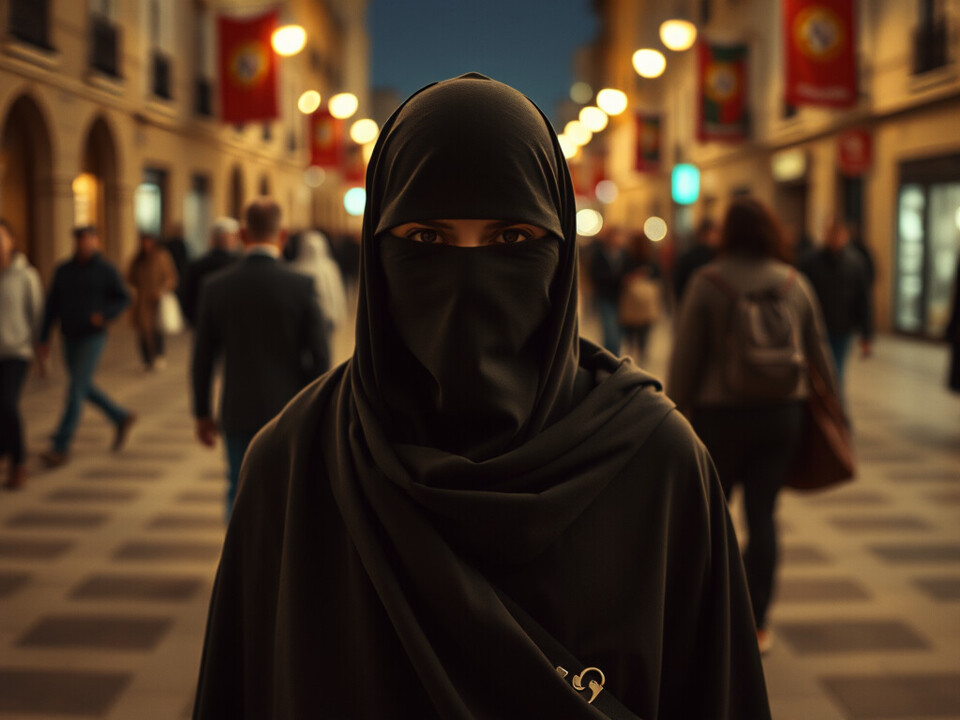
It's time for Burka: radical right is creating a 'political fact' in Portugal

create-a-featured-image-that-captures-the-contenti

Law often lags behind reality. This is a well-known maxim in legal theory: laws emerge, for better or worse, as responses to new and evolving social challenges. Politics, too, is meant to offer such responses—through negotiation among competing forces in search of what has been called “common ground.”

However, the rise of populist and demagogic movements has disrupted this process. In such contexts, “political facts” are no longer the product of pressing, undeniable realities, but often fabricated events—crafted to stir division and signal ideological belonging.

That is precisely where we find ourselves with a recent bill proposed by the far-right Chega party in Portugal. It aims to ban face coverings in public spaces—even when worn for religious reasons.

Though the bill is framed around public safety concerns—arguing that face coverings may hinder criminal investigations—it can be more accurately understood as an attempt to manufacture a political issue where none exists. On social media, party members have made it clear: this isn’t about all forms of face coverings; it’s specifically about banning the burka.

So, how is this a fabricated issue? Simply put: the burka is not a common sight in Portugal. One might argue that Chega is attempting to anticipate future problems. But in light of the party’s track record, it’s more plausible that this is part of a broader strategy to sustain a constant sense of cultural alarm. After the governing coalition (AD) took on the politically charged topics of immigration and citizenship law—triggering constitutional concerns and accusations of yielding to nativist pressure—Chega had to raise the stakes. What better way than to import a moral panic from other European contexts?

What’s telling is how the party justifies this measure: by positioning it as a feminist act, a defense of women’s rights against religious oppression. The bill states that anyone who forces another person to cover their face through threats, coercion, or abuse—specifically based on sex—should be punished under the criminal code for aggravated assault.

At the same time, the bill frames secularism as a justification for banning religious symbols in public institutions—schools, hospitals, public transport, and other state-run facilities. Here, Chega merges two traditionally contradictory lines of the radical right: an aggressive secularism aimed at Islam, and a nostalgic Christian nationalism seen in leaders like Viktor Orbán.

This rhetorical juggling act is part of a broader far-right strategy observed across Europe: embracing temporary “homonationalist” and “femonationalist” narratives—terms analyzed by Jean-Yves Camus and Nicolas Lebourg (2017), and by Sara R. Farris in In the Name of Women’s Rights (2017)—to defend so-called “civilizational values” against the threat of Islam.

This supports the view, articulated by theorists like Ernesto Laclau, that populism is less a coherent ideology than a flexible form of discourse and representation, built around a constant “us vs. them” logic. It is a political method that molds itself to the moment, always claiming to represent “the people” against elites, outsiders, or invented threats.

In the end, this bill is not about public safety, gender equality, or religious freedom. It is about staking ground in an imported culture war—and feeding the fire of identity politics with borrowed symbols. A classic maneuver in the ever-shifting playbook of the radical right.


Camus, J.-Y., & Lebourg, N. (2017). Far-Right Politics in Europe. Cambridge, MA: Harvard University Press.
Farris, S. R. (2017). In the Name of Women's Rights: The Rise of Femonationalism. Durham, NC: Duke University Press.

Laclau, E. (2005). On populist reason. Verso.


sexta-feira, 27 de junho de 2025

Portugal & Cultural Relativism

create-a-featured-image-for-a-blog-post-titled-por

The reasons behind polarization are well known, and the literature has extensively documented them. They range from divergent social rhythms across regions of the West—even within countries, as seen in the contrast between urban America and the rural Midwest—with tensions between progressivism and a conservative cultural backlash around moral issues (the so-called culture wars), such as abortion, same-sex marriage, and the highly politicized issue of gender identity, to more material concerns related to migratory flows and cultural clashes.

The cultural dimension is the central node in this debate. Multiculturalism emerged as a concept aimed at explaining the dynamics of cultural encounters and hybridization resulting from the shift toward a “global village,” spurred by accelerated migration flows to the Global North. It became the natural consequence of cultural exchange and growing diversity that increasingly characterized Western societies—especially in major cities across Europe and North America. These were human flows and counterflows weaving new social fabrics.

However, critical voices emerged early on. In the 1970s, Alain de Benoist, architect of the European New Right (although far more philosophically sophisticated than today’s new right), raised concerns. In the 1980s, it was Alasdair MacIntyre, and in the 1990s, Samuel P. Huntington. They shared a common worry: the challenges multiculturalism posed to local identities and to a broader European identity. These ideas would later be taken up by others in the 21st century—Giovanni Sartori, for instance, who viewed multiculturalism as a dangerous illusion that underestimates the difficulties of integrating migrants from vastly different cultures; Renaud Camus, who developed the “Great Replacement” theory, now the ideological cornerstone of the post-Benoist New Right, based on the idea that there is an intentional political program to replace European populations with Muslim immigrants; and Roger Scruton, who regarded immigration as a threat to the stability and survival of liberal Western democracies, potentially leading to the erosion of the legal order and established social norms.

This line of thought stands in opposition to a counter-hegemonic perspective derived from the ideas of Antonio Gramsci, which have significantly influenced notions of “global citizenship” and cultural relativism. The Gramscian view, which sees hegemony as the cultural domination exercised by elites over subordinate classes, provided a theoretical foundation for challenging structures of power that promote cultural homogeneity and exclude marginal voices. Within this framework, multiculturalism—for Gramscian and postcolonial thinkers—is not seen as a source of social fragmentation or decline, but rather as a necessary response to Western cultural hegemony and imperialism.

Cultural relativism, as advocated by postcolonial thinkers such as Edward Said and Amartya Sen—both strongly influenced by postmodernism—argues that within multiculturalism, it is not enough to give voice and emancipation to those historically subjugated by Western imperialism. One must also adopt a relativistic stance toward the customs, norms, and social standards of migrant communities, even when these conflict with those of the host societies.

From this tension emerge two largely incompatible visions: on one side, a reactionary stance toward immigration and multiculturalism, advocating for the full assimilation of migrants and refugees into prevailing social norms, relegating religion to the realm of personal conscience and individual freedom; and on the other, an ultraprogressive view that sees hegemonic social norms as a continuation of Western colonial and imperial oppression, and is reluctant to acknowledge that large-scale migration poses inevitable challenges.

It is this tension that spills into the central café—through the television, the newspaper on the table, and the opinions exchanged at the counter. Their inherently reductive and simplistic nature is readily channeled by populist movements. Moral panic, sensationalist headlines on crime, and the visible presence of the “other” in spaces once marked by extreme uniformity all contribute to a rise in anti-immigrant sentiment.

However, research I conducted—whose results will be published in 2025—shows that among political elites, commentators, and other prominent figures, strongly polarized views are virtually absent. The clichéd portrayals of an “antinationalist left” committed to the Great Replacement and a reactionary right that rejects all immigration do not hold up. On the contrary, there is a clear concern with avoiding both extreme cultural relativism—which could be used to justify practices that violate human rights—and the rigid imposition of Western values that ignores the cultural particularities of migrants.

There is, therefore, an emerging consensus: immigration is necessary; peoples have the right to their cultural identities; but above all, human rights, the Constitution, and the legal framework must prevail. It is true that more radical actors feed the culture wars: on the left, by downplaying cultural differences and viewing capitalism as the source of all oppression; on the right, by pushing hard assimilationist narratives. But these are more the exception than the rule.

Nonetheless, one must recognize that once the issue enters the central café, it rarely leaves. And Portugal is only now taking its first steps into large-scale, culturally diverse migration. There are lessons to be learned—from both the successes and the failures—of countries that have already walked this path. Therefore, although the most radical political actors may have lost the culture war, even within their own camps, the situation can change rapidly if Portugal fails to implement a full, coordinated, and rights-based integration process—one that upholds the dignity of those who arrive, the primacy of human rights, and acknowledges legitimate concerns about local and national cultural identity. Letting the immigration debate slide into polarization means surrendering it to culture wars and populism. And nothing good ever comes of that.

Trump: Impeachment or the Illiberal Impossibility of Toppling Narcissus

After the forced invocation of the concept of “rebellion” to deploy troops to parts of California—politicizing a legal mechanism (Title 10; Section 12406 of the U.S. Code) for symbolic purposes, as a display of personal strength and a statement on the alleged “incompetence” of California Governor Gavin Newsom—in a dual maneuver of federal intimidation and political humiliation, any other president would be at risk. But not Donald Trump.

The situation escalated dramatically with the authorization of airstrikes on Iran’s nuclear facilities (Fordow, Natanz, and Isfahan) without prior Congressional approval, a clear and serious violation of the U.S. Constitution and the 1973 War Powers Resolution.

This unilateral decision reveals how Donald Trump understands the presidency: a fully unipersonal office, unchecked, unbalanced, and affirming his unmistakably illiberal and autocratic character—a Republican American version of the “Sun King.” With this move, Trump delivers a heavy blow to the principles of liberal democracy, particularly the essential separation of powers, established since Montesquieu as one of the foundations of modern constitutionalism.

Although voices have been raised—from Democrats like Bernie Sanders, who called the attack “alarming” and “grossly unconstitutional,” to some Republicans, like constitutionalist Thomas Massie, who also denounced its illegality—Trump, like all illiberal populists, seems capable of escaping unscathed, thanks to two structural and interconnected factors:
(i) the American electoral system, which is disproportionate and gives rural, MAGA-oriented regions outsized influence; and
(ii) the loyalty of his voter base, which relishes Trump’s shows of strength—whether in war or against American liberal institutions—following him like a charismatic evangelical preacher.

So, while there is a clear legal basis for initiating impeachment proceedings against Donald Trump, recent history shows that such efforts are ineffective. On the contrary, impeachment often serves only to reinforce his political capital, painting him as a victim of the establishment—that is, the political system that cannot tolerate men who claim to be “the voice of the people.”

With both the House of Representatives and the Senate in Trump’s grip, impeachment is unviable, further entrenching his image as untouchable and unremovable. For now, listening to the U.S. Secretary of Defense, one senses that the Trump Doctrine is a fusion of the Cobra Kai motto—“Strike first, strike hard, no mercy”—with Bush Jr.’s imperial illusion of a world under American moral surveillance. That imperial dream may well lead the United States down dangerous paths that could reshape global geopolitics.

In the end, it might well mark the political downfall of Trump. But until then, the American president seems unwavering—proud of his own reflection in the water. We shall see whether he ends like Narcissus—and what world he drags down with him into the waters where he so admires himself.

terça-feira, 24 de junho de 2025

Populismo, Lá Fora e Cá Dentro

José Pedro Zúquete é um investigador respeitado, especialista no populismo e movimentos políticos de direita. Uma das marcas essenciais da obra é a adoção de uma definição de populismo não como ideologia, mas como forma de fazer política, distando de interpretações em linha com Cas Mudde.

Inscrevendo o populismo numa linha do tempo, Zúquete dá nota das vagas populistas ao longo da história do Ocidente, com o American People Party (“POPS”) que no final do séc. XIX mobilizou milhões de pessoas nos EUA em torno de uma ideia de solidariedade de classe e combate aos excessos do capitalismo; seguindo, para os casos sul-americanos, a partir de 1945, de Velasquismo no Equador, o Peronismo na Argentina e o Varguismo no Brasil, baseados na mobilização nacionalista das massas descamisadas, e com uma nova vaga na viragem para o século XXI com revolução bolivariana de Hugo Chávez, os regimes de Evo Morales na Bolívia e Correa no Equador, para chegar aos casos mais recentes de Jair Bolsonaro, Donald Trump e Narendra Modi, de uma direita nacionalista étnica, racial e das “pessoas de bem”.


A partir deste cenário internacional e histórico de eventos e casos populistas, Zúquete irá mergulhar no contexto europeu, dando conta do que poderíamos chamar de DNA do populismo. Para o autor é Le Pen pai quem inaugura o populismo de direita na Europa, dando origem a uma vaga que se espalha pelo continente, sobretudo a partir de 1980.

É nele que se encontram as máximas de “devolver a palavra ao povo” e “dizer alto aquilo que as pessoas pensam em silêncio”, bem como os temas centrais da democracia capturada pelos interesses da elite político-mediática, da necessidade uma democracia direta na forma de referendos e outros instrumentos similares, a ameaça da imigração massiva à sobrevivência dos povos europeus, e no cenário da globalização a oposição entre o povo patriota e nacionalista e os globalistas antipatriotas. No entanto, como o autor alerta, embora classificada como uma grande família política de direita populista radical, a verdade é que existe uma grande diferença entre todos os partidos populistas de direita europeus.

Zúquete define o populismo como uma dicotomia central entre povo e elites, entendendo-o como ideologia adaptável, estratégia de poder e discurso performativo. O populismo opõe os de baixo aos de cima e representa-se por uma liderança carismática, sendo dinamizado por queixas populares contra o sistema. Em termos democráticos, propõe uma soberania popular direta contra instituições vistas como corruptas, dando origem à ideia de democracia iliberal. O autor destaca que a ameaça populista varia conforme a robustez institucional, com exemplos como Hungria, Polónia, mas também Suíça e Áustria, onde o impacto foi menor.

Em Portugal, Zúquete identifica várias manifestações históricas de populismo: o "populismo militar" de Sidónio Pais, Delgado, Spínola e Otelo; o "populismo regenerador" de Sá Carneiro, Manuel Monteiro e Paulo Portas no CDS, este último combinando moralismo, religiosidade e oposição ao sistema. À esquerda, destaca o Bloco de Esquerda como populismo antielites e moralizante, usando uma retórica de dois Portugais (os dominados vs. dominantes). Outros casos incluem Fernando Nobre e Marinho e Pinto, ambos com discursos messiânicos e antipartidários.

O Chega é apresentado como continuidade radicalizada do populismo regenerador, centrado na moralização, no produtivismo e na divisão povo/elite. Ventura recorre ao estilo agressivo e ao uso das redes sociais, integrando elementos messiânicos e identitários. Embora nada disto seja novo, o contexto contemporâneo e o estilo mais brusco diferenciam-no. Zúquete conclui com a tensão entre portugalidade (identidade nacional oficial) e novas formas de identitarismo, como o antirracismo comunitarista, apontando para futuros embates populistas em torno da identidade coletiva portuguesa.


Trump: Impeachment or the Illiberal Impossibility of Toppling Narcissus


After the forced invocation of the concept of “rebellion” to deploy troops to parts of California—politicizing a legal mechanism (Title 10; Section 12406 of the U.S. Code) for symbolic purposes, as a display of personal strength and a statement on the alleged “incompetence” of California Governor Gavin Newsom—in a dual maneuver of federal intimidation and political humiliation, any other president would be at risk. But not Donald Trump.

The situation escalated dramatically with the authorization of airstrikes on Iran’s nuclear facilities (Fordow, Natanz, and Isfahan) without prior Congressional approval, a clear and serious violation of the U.S. Constitution and the 1973 War Powers Resolution.


This unilateral decision reveals how Donald Trump understands the presidency: a fully unipersonal office, unchecked, unbalanced, and affirming his unmistakably illiberal and autocratic character—a Republican American version of the “Sun King.” With this move, Trump delivers a heavy blow to the principles of liberal democracy, particularly the essential separation of powers, established since Montesquieu as one of the foundations of modern constitutionalism.

Although voices have been raised—from Democrats like Bernie Sanders, who called the attack “alarming” and “grossly unconstitutional,” to some Republicans, like constitutionalist Thomas Massie, who also denounced its illegality—Trump, like all illiberal populists, seems capable of escaping unscathed, thanks to two structural and interconnected factors:
(i) the American electoral system, which is disproportionate and gives rural, MAGA-oriented regions outsized influence; and
(ii) the loyalty of his voter base, which relishes Trump’s shows of strength—whether in war or against American liberal institutions—following him like a charismatic evangelical preacher.

So, while there is a clear legal basis for initiating impeachment proceedings against Donald Trump, recent history shows that such efforts are ineffective. On the contrary, impeachment often serves only to reinforce his political capital, painting him as a victim of the establishment—that is, the political system that cannot tolerate men who claim to be “the voice of the people.”

With both the House of Representatives and the Senate in Trump’s grip, impeachment is unviable, further entrenching his image as untouchable and unremovable. For now, listening to the U.S. Secretary of Defense, one senses that the Trump Doctrine is a fusion of the Cobra Kai motto—“Strike first, strike hard, no mercy”—with Bush Jr.’s imperial illusion of a world under American moral surveillance. That imperial dream may well lead the United States down dangerous paths that could reshape global geopolitics.

In the end, it might well mark the political downfall of Trump. But until then, the American president seems unwavering—proud of his own reflection in the water. We shall see whether he ends like Narcissus—and what world he drags down with him into the waters where he so admires himself.


segunda-feira, 7 de abril de 2025

Marine Le Pen compara-se a Martin Luther King após condenação

Após a sua condenação por desvio de fundos públicos, a líder da extrema-direita francesa, Marine Le Pen, comparou a sua luta política à de Martin Luther King Jr., enfatizando a intenção de conduzir uma campanha pacífica e democrática. Num discurso por videoconferência durante o congresso do partido italiano Liga, de Matteo Salvini, Le Pen afirmou: "A nossa luta será pacífica e democrática, e o exemplo vem de Martin Luther King". Ao comparar-se a Martin Luther King, Marine Le Pen reivindica um património histórico que não lhe pertence, não tanto pelas questões raciais, mas sobretudo por Martin Luther King representar uma luta pela dignidade racial e política enquanto Le Pen representa o reforço de uma ideia de cidadania com base na identidade biocultural que exclui, precisamente, as minorias. Esse modelo reforça fronteiras entre "nós" e "eles", minando os princípios universalistas que King encarnava, representando uma tentativa sofisticada de reverter o eixo da vitimização política, um gesto retórico cada vez mais comum entre populistas autoritários. 

quarta-feira, 2 de outubro de 2024

Qual a política de memória para Benavente?

image.webp

Benavente é formalmente instituída como localidade, através de carta de Foral, a 25 de março de 1200. Trata-se de uma das localidades mais antigas do país, com uma trajetória histórica e cultural importante, mas que não tem sido objeto de políticas ativas no plano da memória histórica e cultural.

A literatura especializada, de Maurice Halbwachs a Pierre Nora, afirma a importância da memória coletiva como marcador identitário de um povo, mesmo sabendo que as memórias são remexidas de modo a enfatizarem narrativas, as quais são, por sua vez, também basilares na identidade de um grupo que compõe o Estado. Com efeito, a ideia de «nação» é uma construção apressada, do século XIX, que por tal é frágil e precisa de memórias essenciais para se manter.

No caso de Benavente, atendendo ao seu histórico de longo-termo, o que surpreende é o vazio de uma política de memória. É verdade que a ideia de memória tem uma ressonância política e uma textura, em Portugal, ligada ao Estado Novo e à fabricação do país rural, de bons e comedidos costumes. É por isso que a memória benaventense foi e mantém-se formatada em torno da cultura campina e tauromáquica, concordante com o ideal do Estado Novo. Efetivamente, tal memória não se afasta da realidade. Pelo contrário, a memória campina e tauromáquica é nodal da cultura ribatejana e afigura-se património identitário essencial que vem sendo promovido.

O problema reside, em rigor, no esvaziamento de qualquer memória adicional. É difícil compreender por que motivo o Foral e as figuras do Mestre Pelágio e D. Sancho I não são exaltadas condignamente, por exemplo, através de uma estátua adequada, como Salvaterra de Magos possui a homenagear os falcoeiros. De igual, a própria Ordem de Avis, ligada à fundação de Benavente, e a Ordem Religiosa de Sant’Lago à qual pertencia o Fortim de Belmonte, ligada à fundação de Samora Correia, tal como figuras como a mulher Çamora, que seria familiar de D. Paio Peres Correia, bem como este, entre tantas outras, tais como o militar Pedro de Meneses, mereciam uma política de memória ativa. A própria memória da Igreja Matriz é difusa e pouco integrada, não como elemento estritamente religioso, mas como património cultural. 

Há, portanto, uma défice gigantesco em termos de memória histórica e cultural no Município de Benavente, que precisa ser colmatado, através das instituições municipais, como museu e outros espaços culturais, bem como por via da política pública de espaços edificados, como praças, rotundas e jardins, de modo a evitar que a identidade do município pareça esgotar-se na cultura campina.  

quarta-feira, 26 de junho de 2024

Portugal, um país que recebe, mas será que acolhe?

Costuma-se dizer que Portugal é um país acolhedor. Por Portugal entende-se os portugueses, a sociedade portuguesa. No entanto, ouvimos queixas de imigrantes sobre xenofobia e racismo, e tudo é questionado. Os mais conservadores recusam tais acontecimentos, duvidando da sua veracidade, enquanto os mais progressistas enfatizam que Portugal (a sociedade) é estruturalmente racista e xenófobo, sem diferença em relação a outros povos. Ora, a realidade parece contrariar ambas as posições. Por um lado, dados do European Social Survey mostram crenças racistas disseminadas na sociedade portuguesa; por outro, um inquérito aos afrodescendentes na Europa revela que Portugal é onde se sentem menos vítimas de discriminação.
O que sucede é uma confusão entre receber e acolher. Portugal é um país que sempre recebeu bem, devido à sua natureza transitória, amplamente ligada ao turismo, onde receber bem traduz-se em ganhos económicos. Ao mesmo tempo, graças ao Estado Novo, desenvolveu-se uma natureza servil na alma portuguesa. Contudo, receber não é acolher. Sabemos disso quando recebemos visitas em casa por alguns dias, ao invés de apenas algumas horas. Essa diferença aplica-se à sociedade. Portugal recebe bem, mas não acolhe tão bem. E, embora possamos afirmar que há uma hierarquização racial nesse processo, a questão fundamental é a distinção entre receber e acolher. Se é verdade que há uma preferência por europeus, também é verdade que existe uma rejeição, dado que fazem subir o preço dos imóveis, e um grupo de alemães alcoolizados pode ser menos agradável do que um grupo de bengaleses sossegados.

sexta-feira, 21 de junho de 2024

Gullit e "blackface"

No quadro das lutas pela hegemonia cultural e de guerras culturais que vivemos, de vez em quando vem à tona a questão do “blackface”, pratica em que uma ou mais pessoas brancas pintam a cara de negro de modo a representarem alguma personagem negra. O caso mais recente foi o de um grupo de adeptos dos países baixos (ex-Holanda) que pintaram a cara de negro, colocaram cabeleira e vestiram a camisola da seleção do país de modo a representarem o lendário jogador Ruud Gullit. 


Ora, o “blackface” é uma prática historicamente associada ao racismo e à discriminação racial, tendo surgido nos Estados Unidos, no século XIX, nos minstrel shows, apresentações teatrais que retratavam pessoas negras de maneira estereotipada e desumanizante. Atores brancos usavam maquiagem para escurecer a pele e exagerar características faciais, criando personagens que perpetuavam ideias racistas. O “blackface” ajudou a cimentar estereótipos negativos sobre pessoas negras, retratando-as como preguiçosas, pouco inteligentes, exageradamente alegres ou perigosas. Esses estereótipos influenciaram a perceção pública e justificaram a discriminação e a segregação racial. 

Com a emergência de uma cultura de consciência e justiça social e de combate ao racismo, o “blackface” tornou-se uma prática moralmente inaceitável. Naturalmente que esse processo contrahegemónico e de justiça social, estando numa fase em que se debate com a emergência de um radicalismo conservador, tende a adotar, igualmente, reações radicalizadas, contribuindo para a polarização.

Quer isto dizer que se o “blackface” é uma prática inaceitável quando visa estereotipar e desqualificar pessoas negras, pode, ainda, acontecer que seja uma prática contrária, que visa enaltecer determinada personalidade pública ou histórica. É o que acontece neste caso, em que Gullit, a suposta vítima, se sente elogiado. Questionado sobre o caso, o jogador internacional neerlandês Nathan Aké, negro, afirmou não ver qualquer problema com o assunto. 

Assim, em nome da justiça social, precisamos verificar se práticas como esta visam desqualificar pessoas negras, contribuindo para o racismo, ou se, pelo contrário, têm por propósito enaltecer. Deste modo, a abordagem tem de ser caso a caso, evitando uma condenação por arrasto, de natureza censória e de purificação social que funciona em sentido contrário à benemérita intenção. 


terça-feira, 18 de junho de 2024

A questão do "orgulho gay"

A trajetória dos movimentos LGBT(QIA+) explicita uma luta pelo reconhecimento e dignidade no seio de uma hegemonia cultural normativada a partir de padrões religiosos de matriz eminentemente cristã, que considera a homossexualidade um pecado, donde surgiu uma visão clínica que considerou tal orientação sexual uma patologia, e uma orientação jurídica que criminalizou a prática. Mas ainda no século XIX, na década de 1860, o advogado alemão Karl Heinrich Ulrichs, considerado um dos primeiros defensores dos direitos dos homossexuais, argumentava que a homossexualidade era inata e deveria ser descriminalizada. Mais tarde, o sexólogo alemão Magnus Hirschfeld fundou o Comitê Científico Humanitário em 1897, que se dedicava a promover a reforma legal e a aceitação social da homossexualidade. A partir dos anos de 1950 e 1960, dá-se uma aceleração das lutas pelo reconhecimento, com o surgimento de grupos organizados, e com a Revolução Sexual a trazer o desafio das normas sociais sobre sexualidade e género. No entanto, o marco decisivo para os movimentos LGBT modernos foi a Rebelião de Stonewall, que ocorreu em junho de 1969 em Nova York. Após uma batida policial no bar Stonewall Inn, frequentado pela comunidade LGBT, houve uma série de protestos e confrontos que duraram vários dias. Este evento é amplamente considerado o ponto de partida do movimento de libertação gay. Após Stonewall, surgiram numerosas organizações ativistas, como a Gay Liberation Front (GLF) e a Gay Activists Alliance (GAA), que defendiam direitos civis, sociais e políticos para pessoas LGBT.


As décadas de 1980 e 1990 foram importantes, com a crise da SIDA a impactar profundamente, em especial entre homens gays. Nos anos 1990, houve avanços significativos em termos de reconhecimento e direitos. Vários países começaram a descriminalizar a homossexualidade e a implementar leis de proteção contra a discriminação.

O século vigente traria novidades, através do reconhecimento legal do casamento entre pessoas do mesmo sexo. Em 2001, os Países Baixos foram o primeiro país a legalizar o casamento igualitário, seguido por muitos outros ao redor do mundo. A esta luta juntaram-se novas formas contrahegemónicas de ver a sexualidade e o género, com a emergência dos direitos “trans” e de identidade de género. No entanto, o avanço de tais garantias contribuiu [1] para reacender as «guerras culturais», acelerando as lutas identitárias e a emergência da direita radical populista e nativista. No quadro das guerras culturais pela hegemonia cultural e pela identidade, questões sobre a moralidade sexual são centrais, mobilizando o progressismo e o ultraconservadorismo, de que os Estados Unidos e o Brasil são casos paradigmáticos, graças ao envolvimento militante dos importantes setores evangélicos. Como mostra a literatura sobre as guerras culturais, a moral sexual tem um efeito polarizador na sociedade, uma vez que mexe com crenças profundas dos cidadãos, que passam a ver a disputa não como um plano político, mas uma verdadeira batalha espiritual pela alma do país. 

Em resposta ao movimento de “orgulho gay”, que procura visibilizar e alertar para a dignidade e garantia de direitos destas comunidades – que em várias cidades do Ocidente se tornaram verdadeiros festivais públicos –, vem surgindo uma narrativa de “orgulho hétero”, como reação hegemónica em torno da “defesa da família tradicional”, a qual é percebida como estando sob ataque. Esta perceção não acolhe respaldo na realidade, já que as famílias heterossexuais não são discriminadas, não são minoritárias, nem têm direitos vedados. 

Em segundo lugar, decorre uma crítica de que as paradas gays são excessivas. Embora se perceba que do ponto de vista estético possam chocar, mesmo aquelas que são favoráveis aos direitos destas comunidades, a verdade é que as paradas gays pretendem visibilizar através da performance. Mais acresce, que em nada distam de inúmeros carnavais, nomeadamente o muito português Carnaval de Torres Vedras e que homens se vestem de mulheres (“matrafonas”). Portanto, o ponto não é o excesso estético, mas a aceitação da homossexualidade em termos não discordantes com o que Butler chama de “performances de género” [2], em que há um conjunto de modos de estar socialmente aceites. 

Assim, mesmo nos casos em que há uma aceitação da homossexualidade (o que já é uma conquista social), decorre uma expectativa de comportamentos concordantes com a heteronormatividade, de que a imaginação de que um membro do casal faz o “papel de homem” e outro “de mulher” é exemplo acabado. 

Em terceiro lugar, verifica-se uma indisponibilidade social para manifestações sociais coletivas de visibilidade LGBT(QIA+), como bandeiras arco-íris em logos, fachadas de monumentos, passadeiras, entre outros espaços públicos, durante o mês do Orgulho Gay (presente mês de junho), considerando um excesso de atenção a esta comunidade.

Portanto, a “questão do orgulho” mobiliza vários aspetos sociais, políticos e morais, enfatizando uma tensão e polarização que produz uma guerra cultural, quando está em causa salvaguarda da dignidade do direito a ser e existir socialmente. Por outro lado, no campo mainstream em que já se verifica uma aceitação, encontramos uma rejeição de manifestações públicas, em especial do Estado, de visibilização da comunidade LGBT(QIA+), considerando que se trata de um enfoque excessivo num grupo particular, em detrimento da maioria (princípio da democracia maioritária), com uma resposta de promoção de um “orgulho hétero”. Ora, como certa vez vi numa imagem nas redes sociais, “não há mês do orgulho hétero, da mesma forma que não há ‘sopa dos pobres’ para ricos”, porque, de facto, não é preciso. Numa situação normal, de crescendo de pluralidade democrática, o mês do orgulho gay também seria desnecessário, sucede que as sociedades não funcionam assim, e as guerras culturais contra a diversidade sexual estão aí para o provar. 

[1] esta questão não é autónoma do importante contributo das crises económicas e instabilidades socioeconómicas a partir de 2008. 

[2] embora não adote na totalidade os postulados de Butler, que partem de uma leitura excessivamente desconstrutivista que não leva em conta a noção de «universais culturais».